People Compatible

Work

Selected work

Products across US Bank, Meta, and Microsoft, plus a personal project I’m building now.

Personal project · In progress

At home, everything in its place

Building a solution for my most personal product: my home.
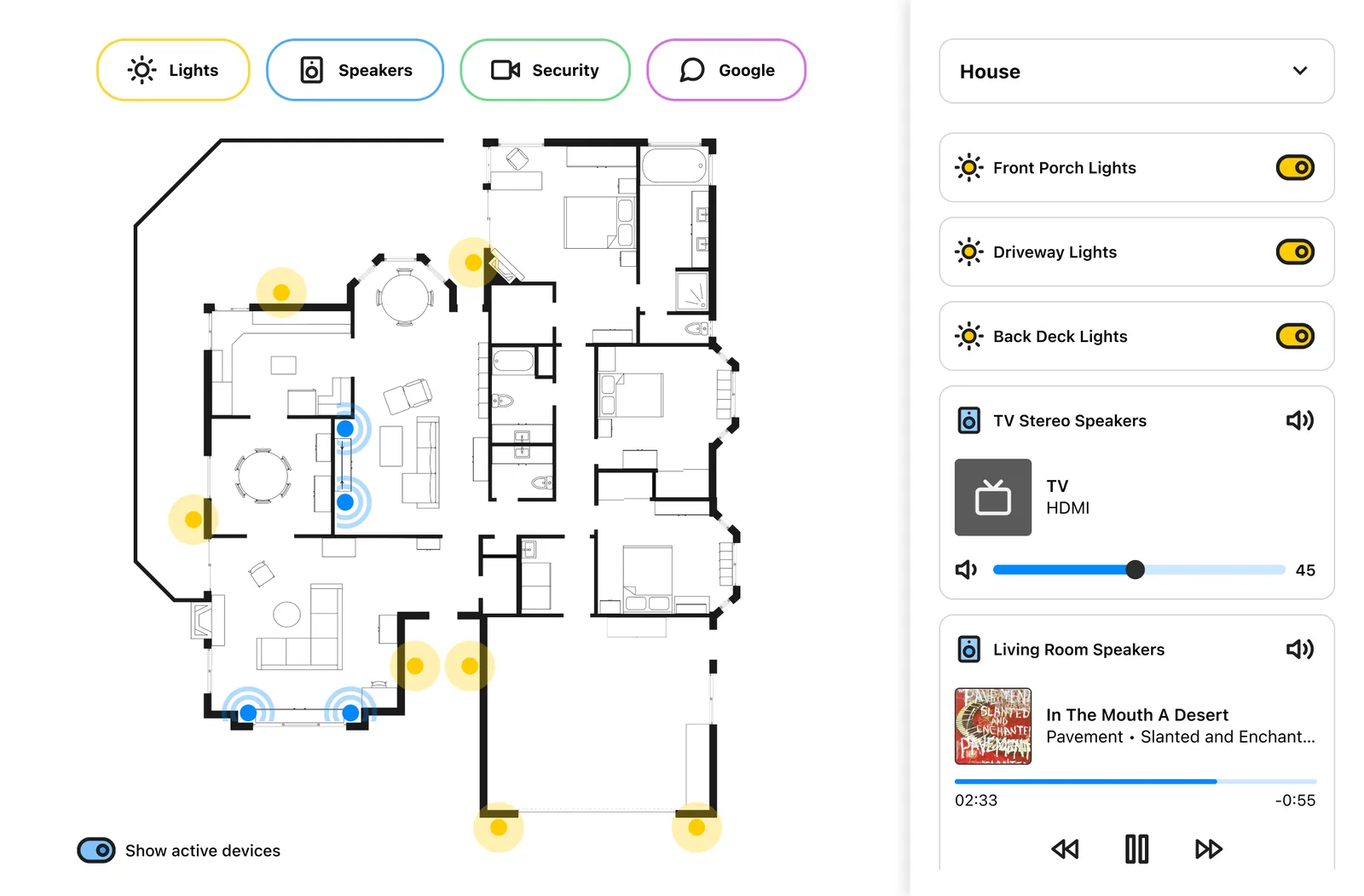
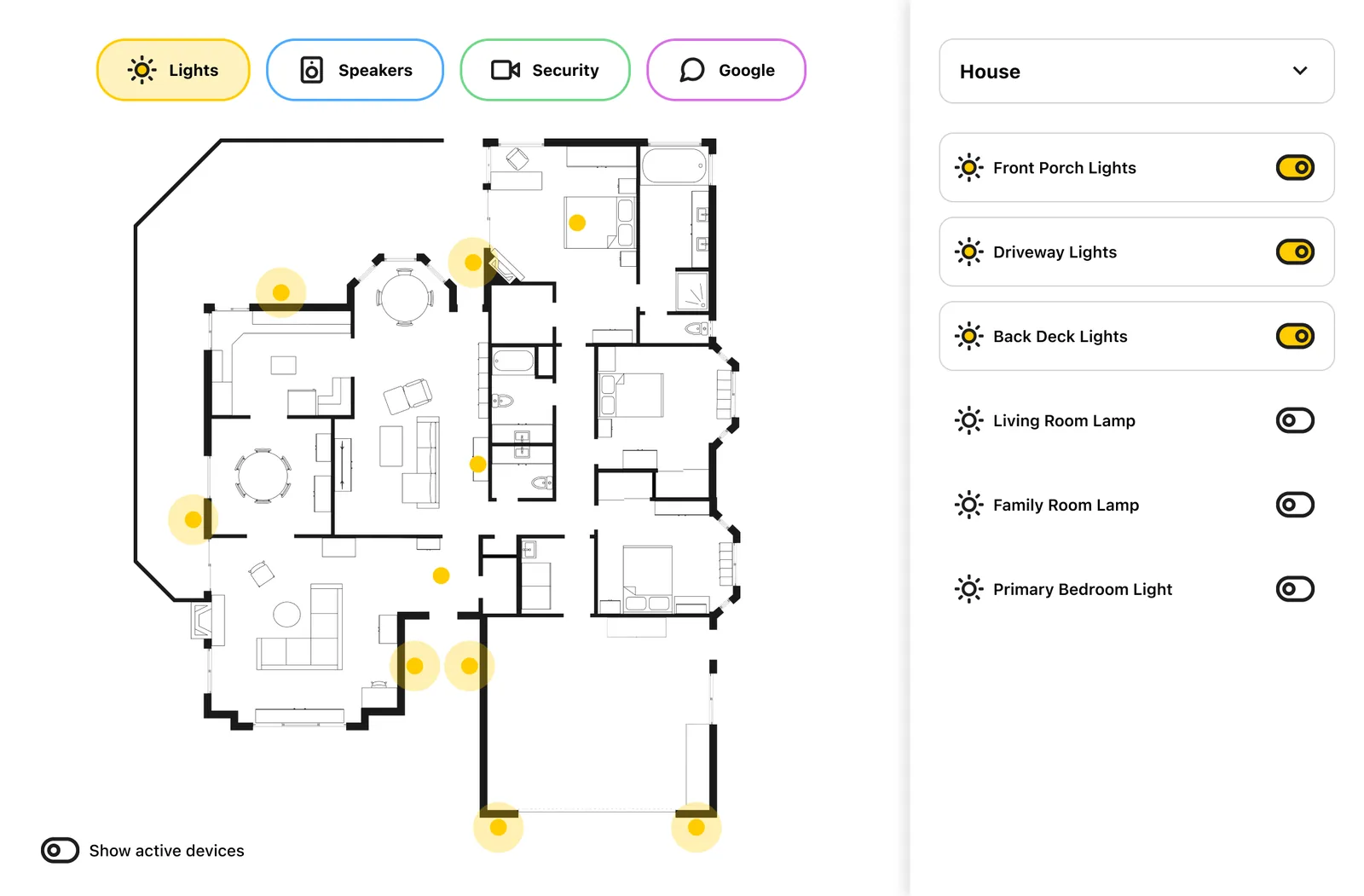
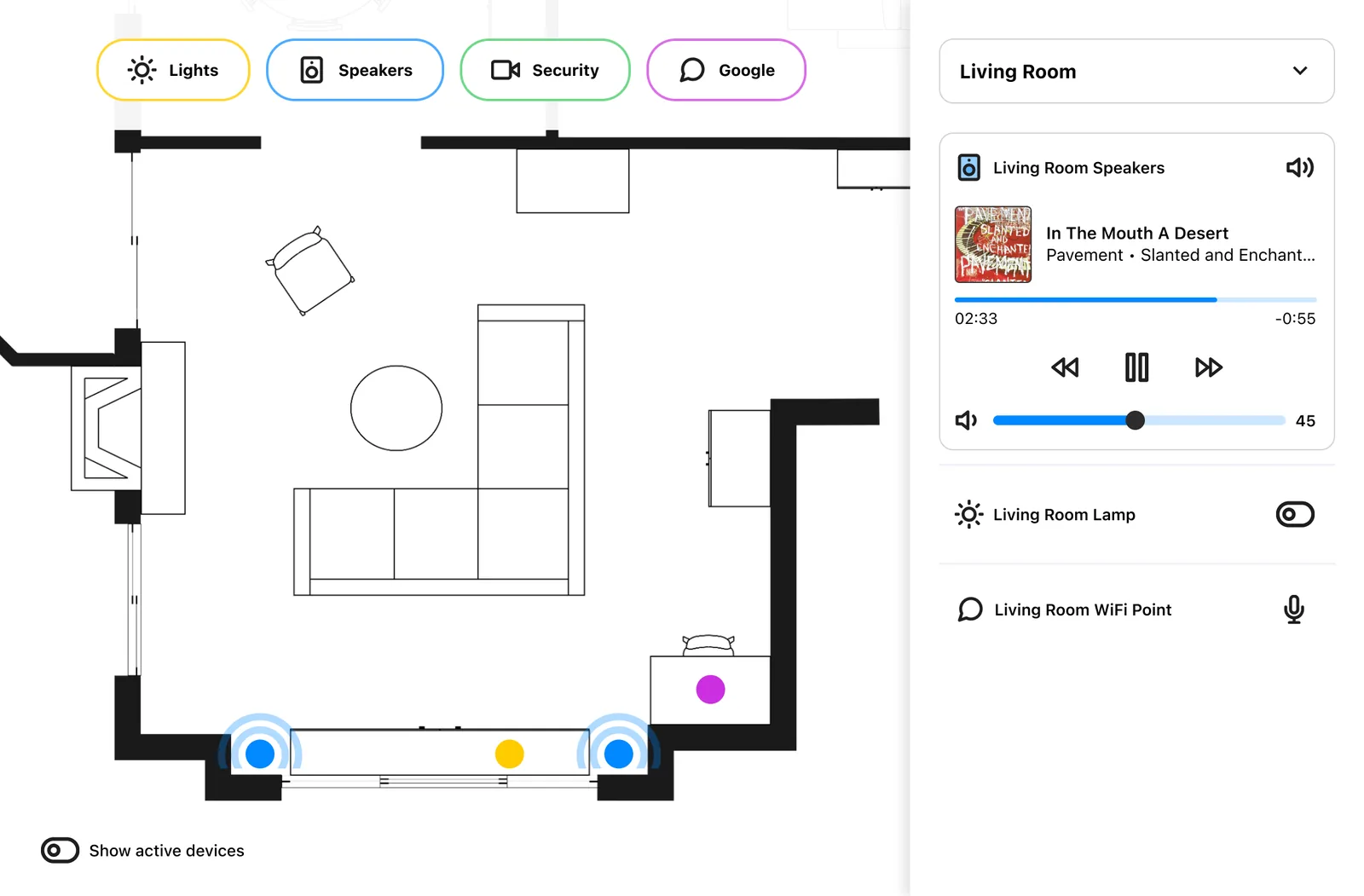
Home automation app on a landscape iPad. A floor plan of the house shows active lights as yellow dots and playing speakers as blue dots, with filters for Lights, Speakers, Security and Google. A side panel lists porch, driveway and back deck light toggles, TV speaker volume, and the living room speakers playing a track.
Lights filter: every light on the floor plan as a yellow dot. The side panel lists each light with an on or off switch.
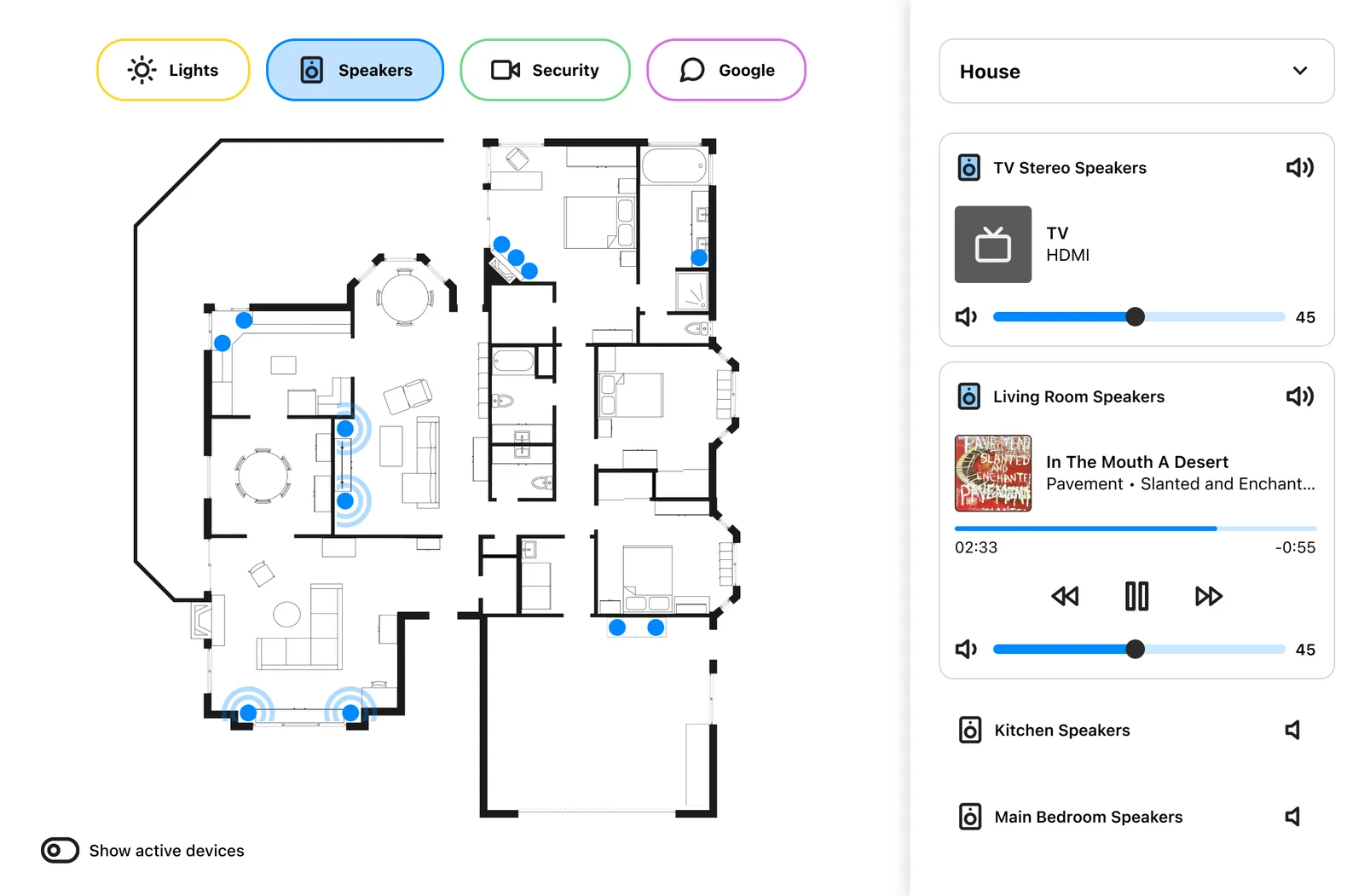
Speakers filter: speakers on the floor plan as blue dots. The side panel shows the TV speakers and living room speakers playing, with volume and playback controls.
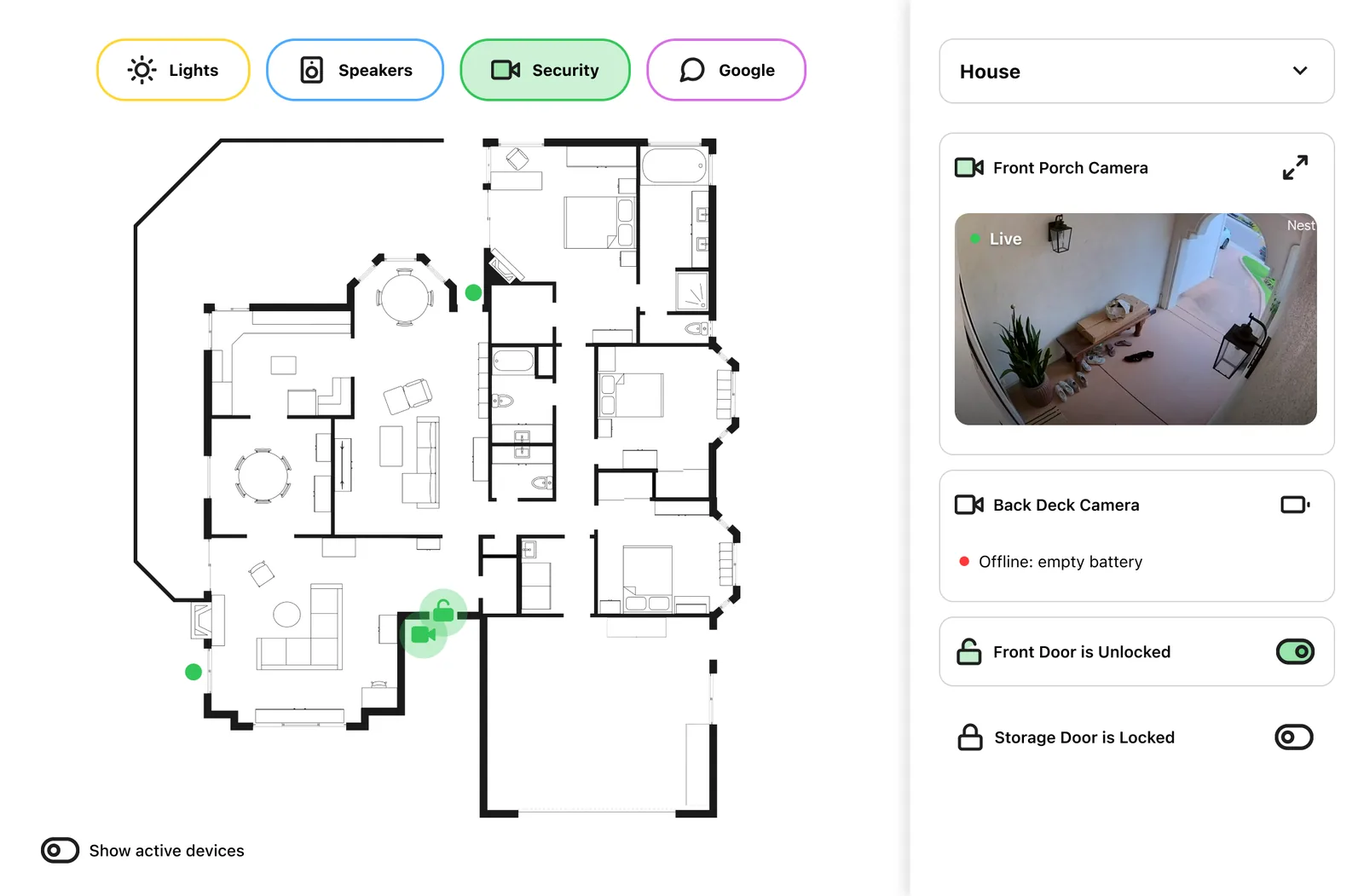
Security filter: cameras and locks on the floor plan as green dots. The side panel shows a live front porch camera feed, an offline back deck camera, and door locks.
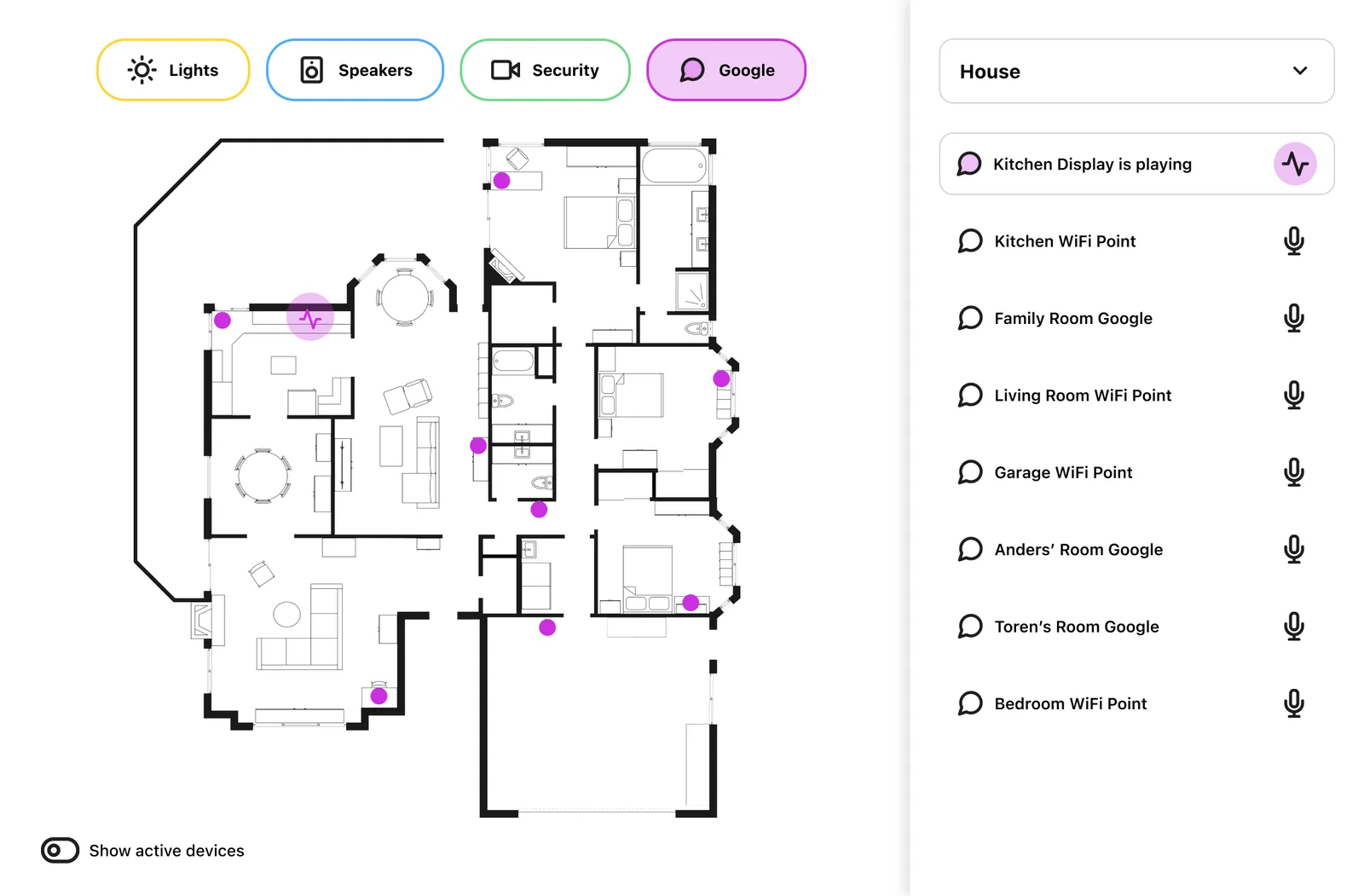
Google filter: Google speakers, displays and WiFi points on the floor plan as purple dots. The side panel lists each one, with the kitchen display playing.
Living room view: the room zoomed in on the floor plan, with its speakers, lamp and WiFi point. The side panel controls the speakers, lamp and WiFi point.
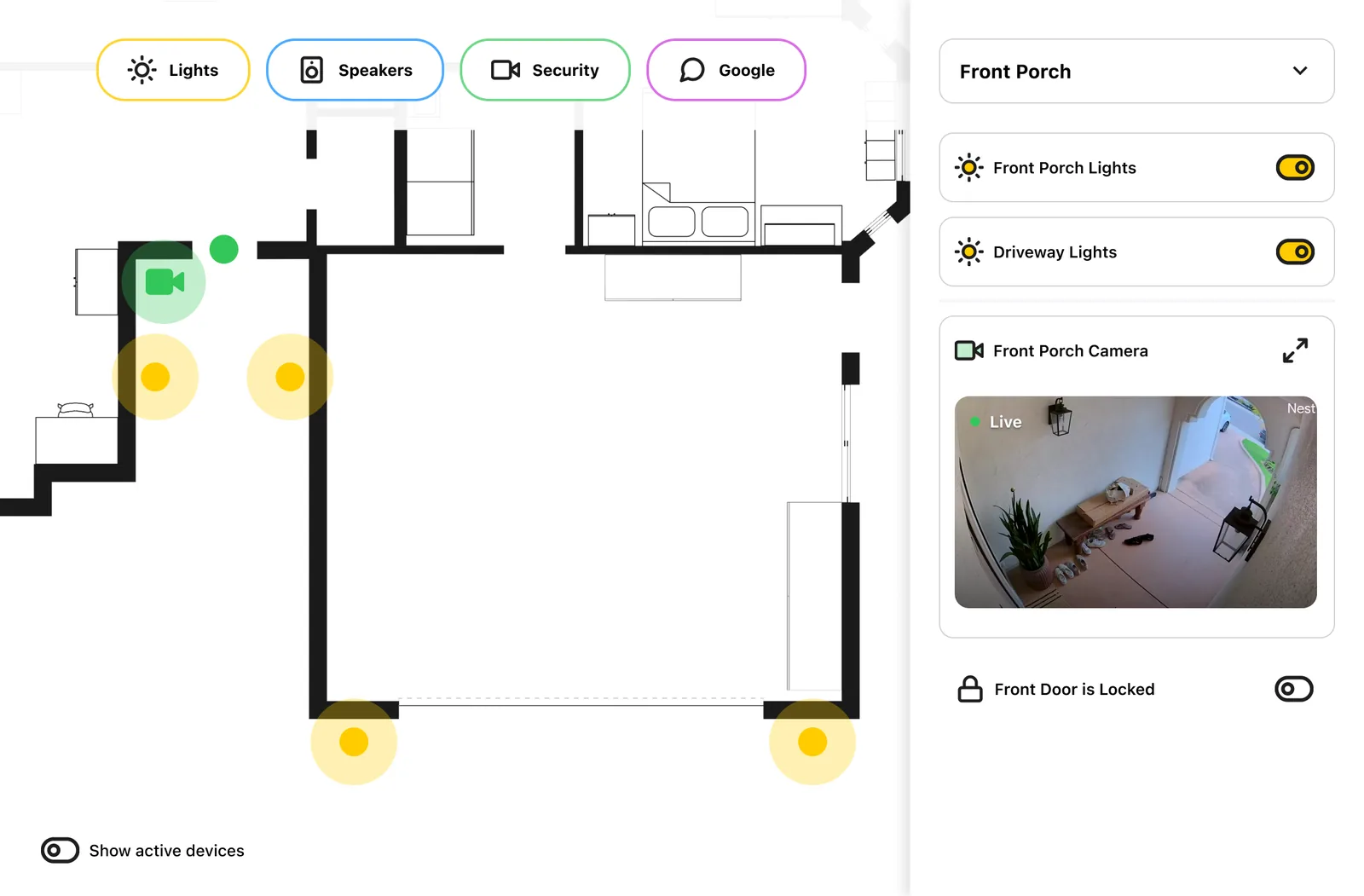
Front porch view: the entry zoomed in on the floor plan. The side panel has porch and driveway light switches, the live porch camera, and the front door, locked.
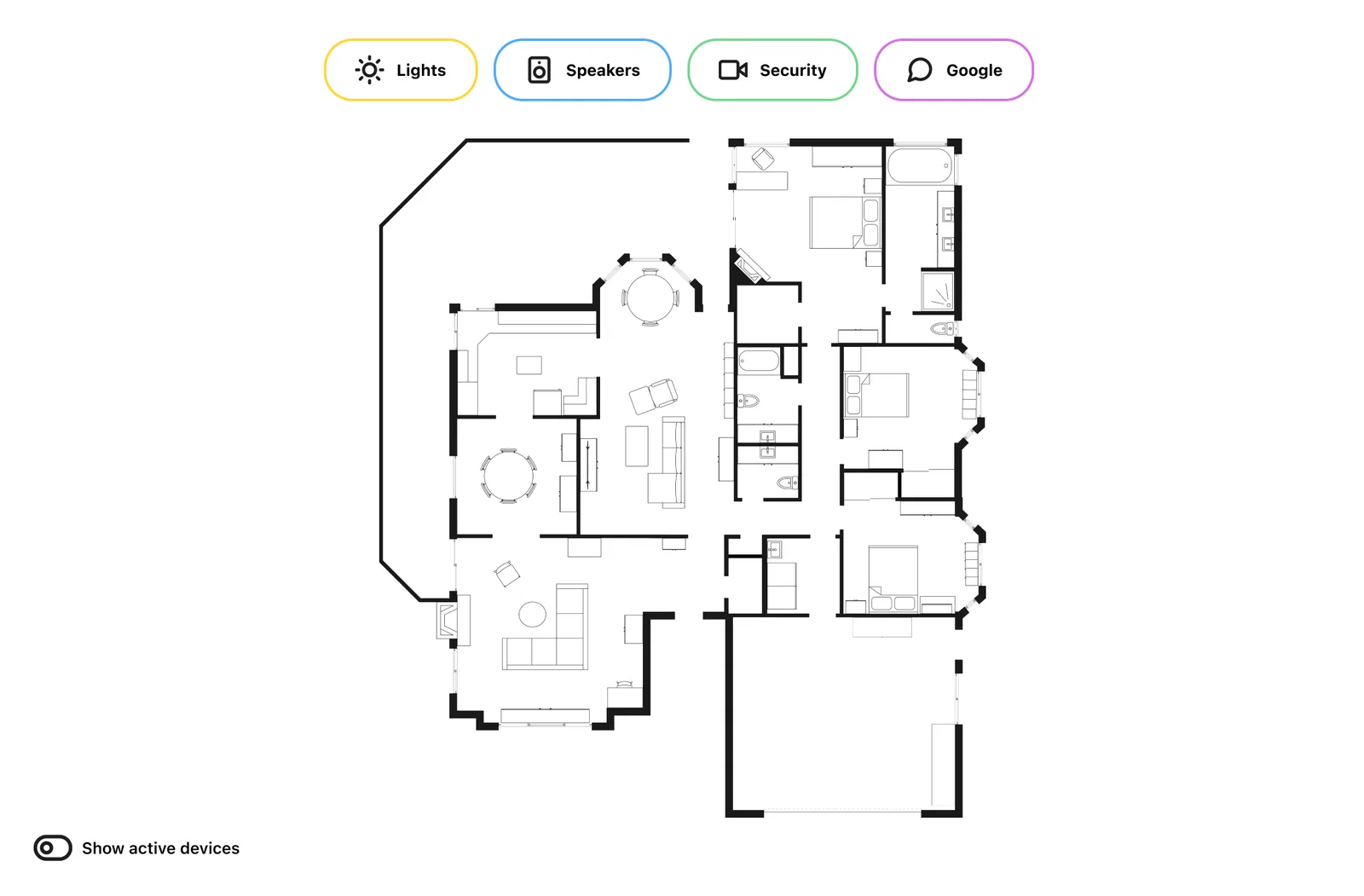
Default view: the whole floor plan with no devices shown, under the Lights, Speakers, Security and Google filters.

Home: every active device in its room, with quick controls in the side panel.

1 / 8
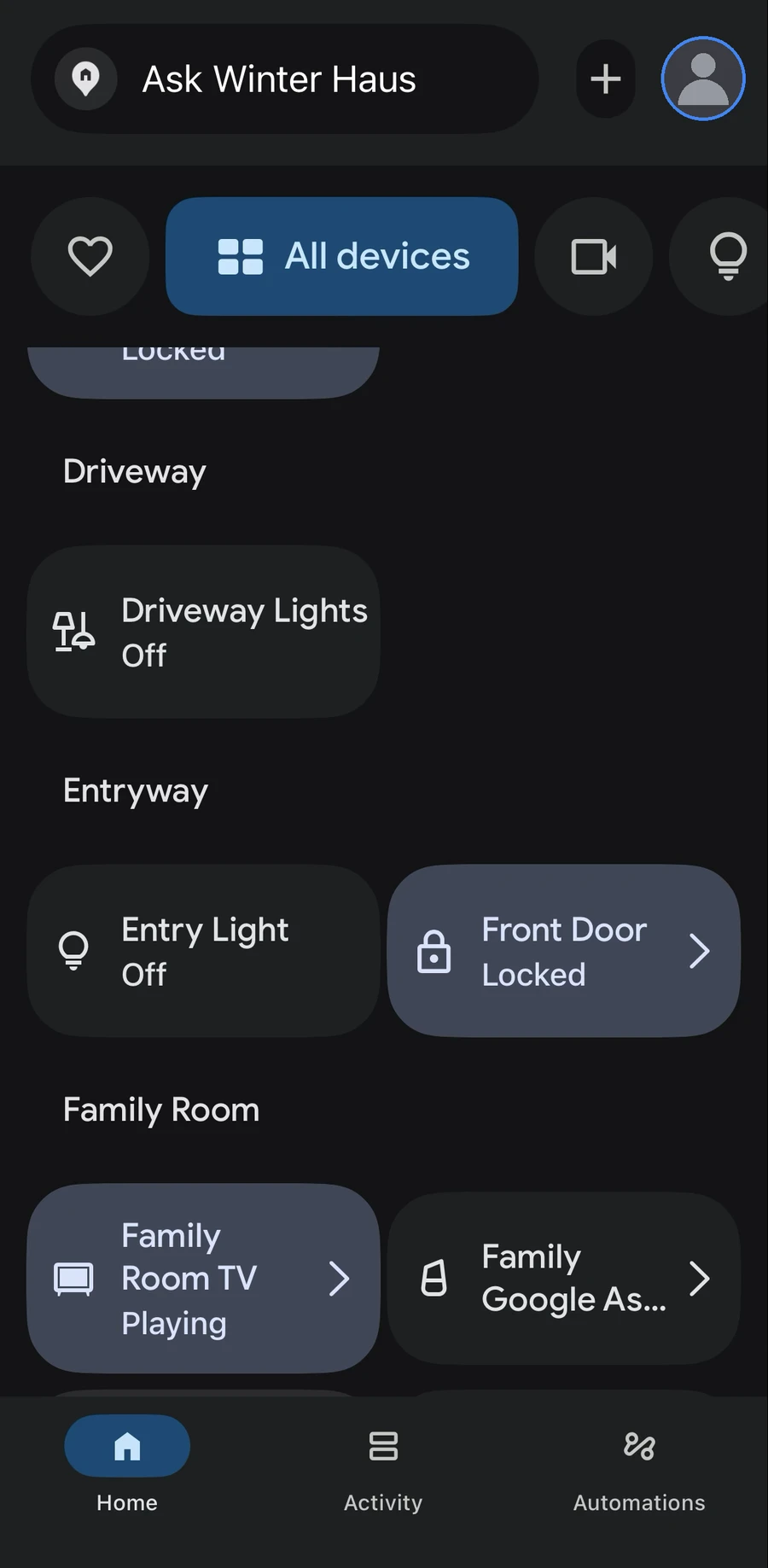
Google Home app on a phone: a long list of device tiles grouped under room names like Driveway, Entryway and Family Room
My Google Home app
Problem
Smart home apps from Google and Apple turn a home into lists of room and device names, and leave you to work out which one is the lamp beside you.
Actions
I designed a home screen that maps every device to the room it's in, and a view for every room in the house. Filters isolate lights, speakers, and security. My own house is the first test.
Outcomes
In progress. Every Google, Sonos, and smart home device in my house is now mapped to the Home Assistant platform. On top of that, early, rough prototypes are running, and we're iterating on them.
Meta · Ads measurement

Facebook Attribution

Conceived, designed, and shipped the largest volume ads measurement product at Meta, helping marketers with basic and advanced needs see the true value of every ad, across every platform.
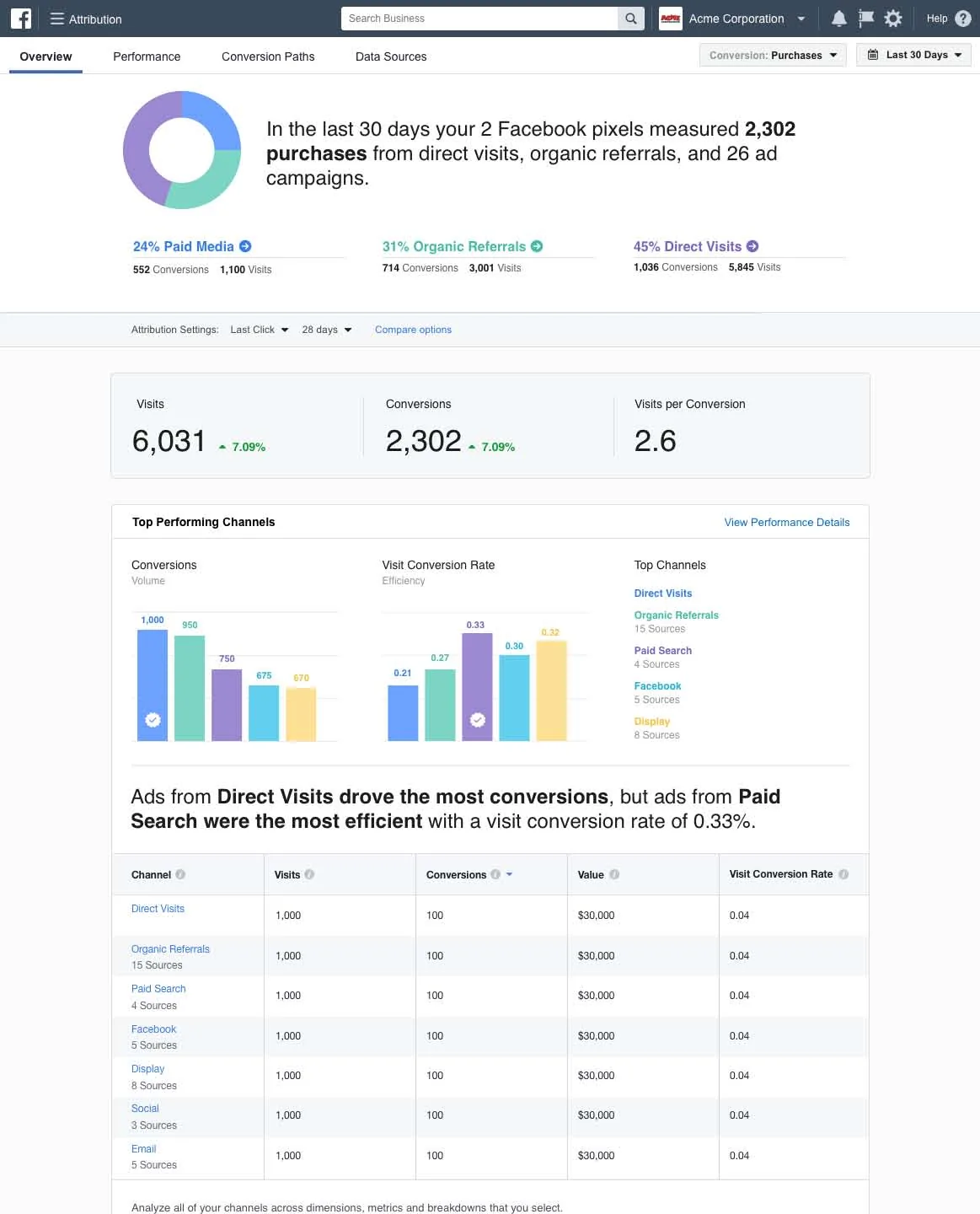
Facebook Attribution V1 overview dashboard

V1 overview dashboard

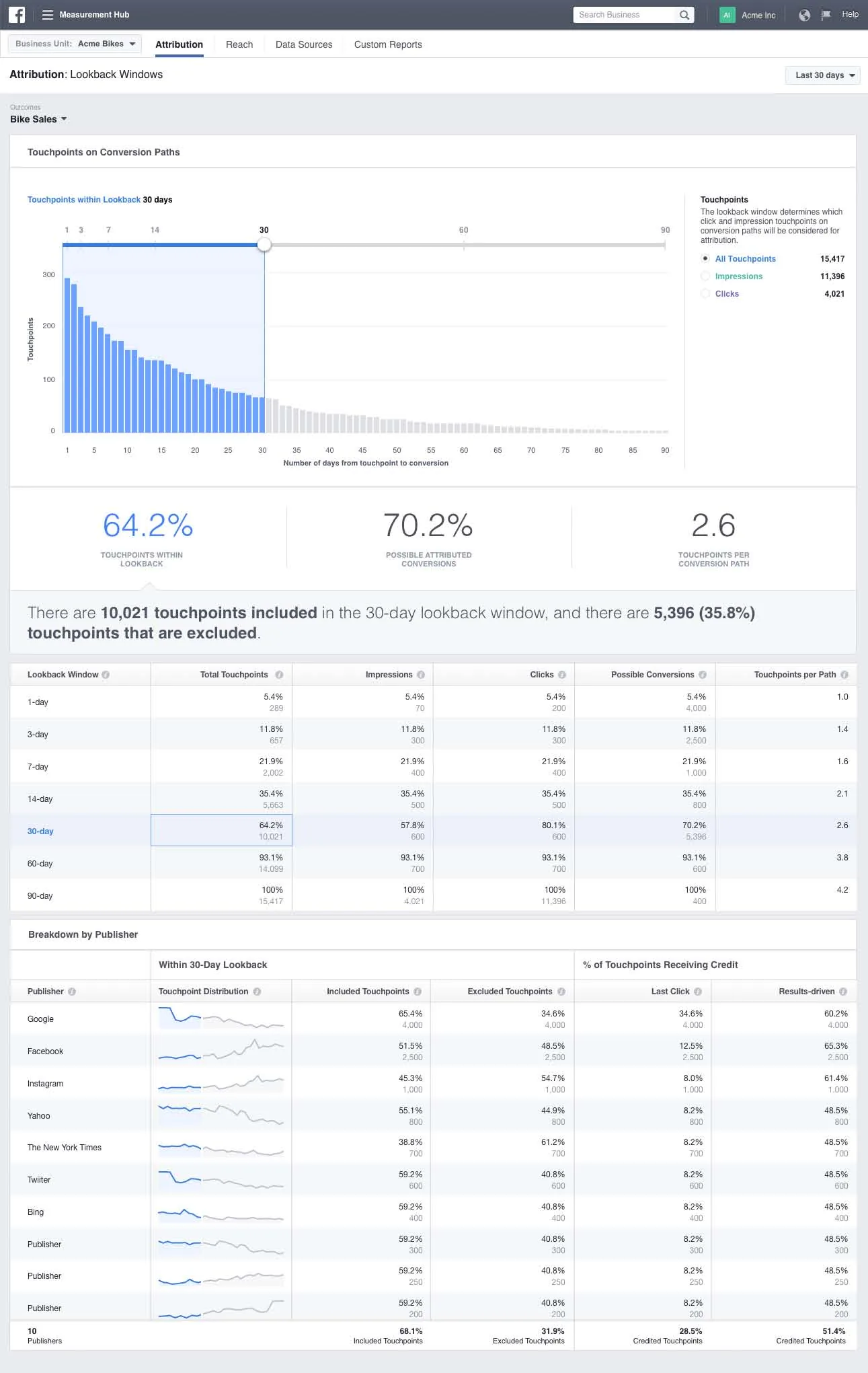
Beta attribution window report

Beta: attribution window

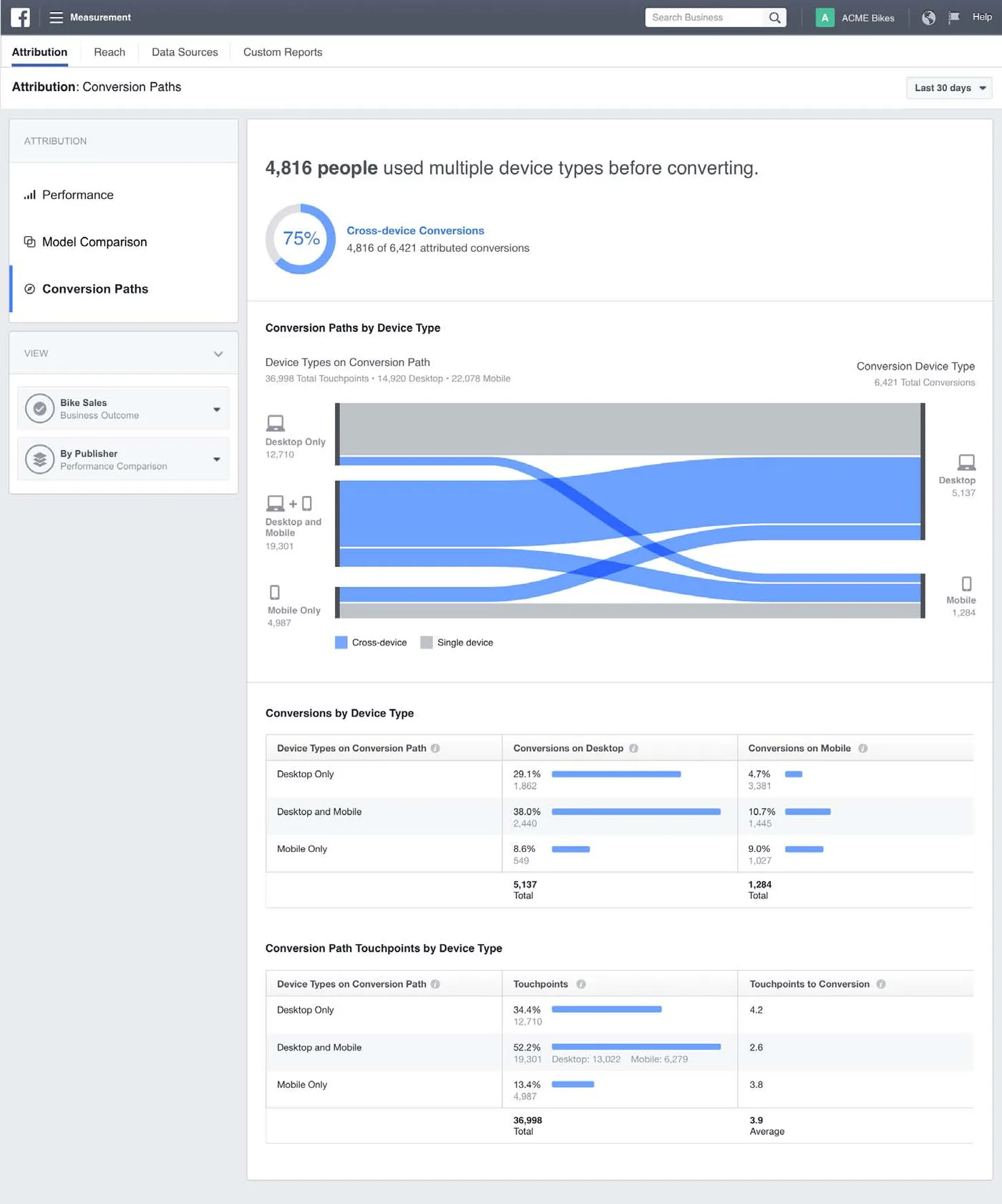
Beta cross device report: conversion paths by device type

Beta: cross device

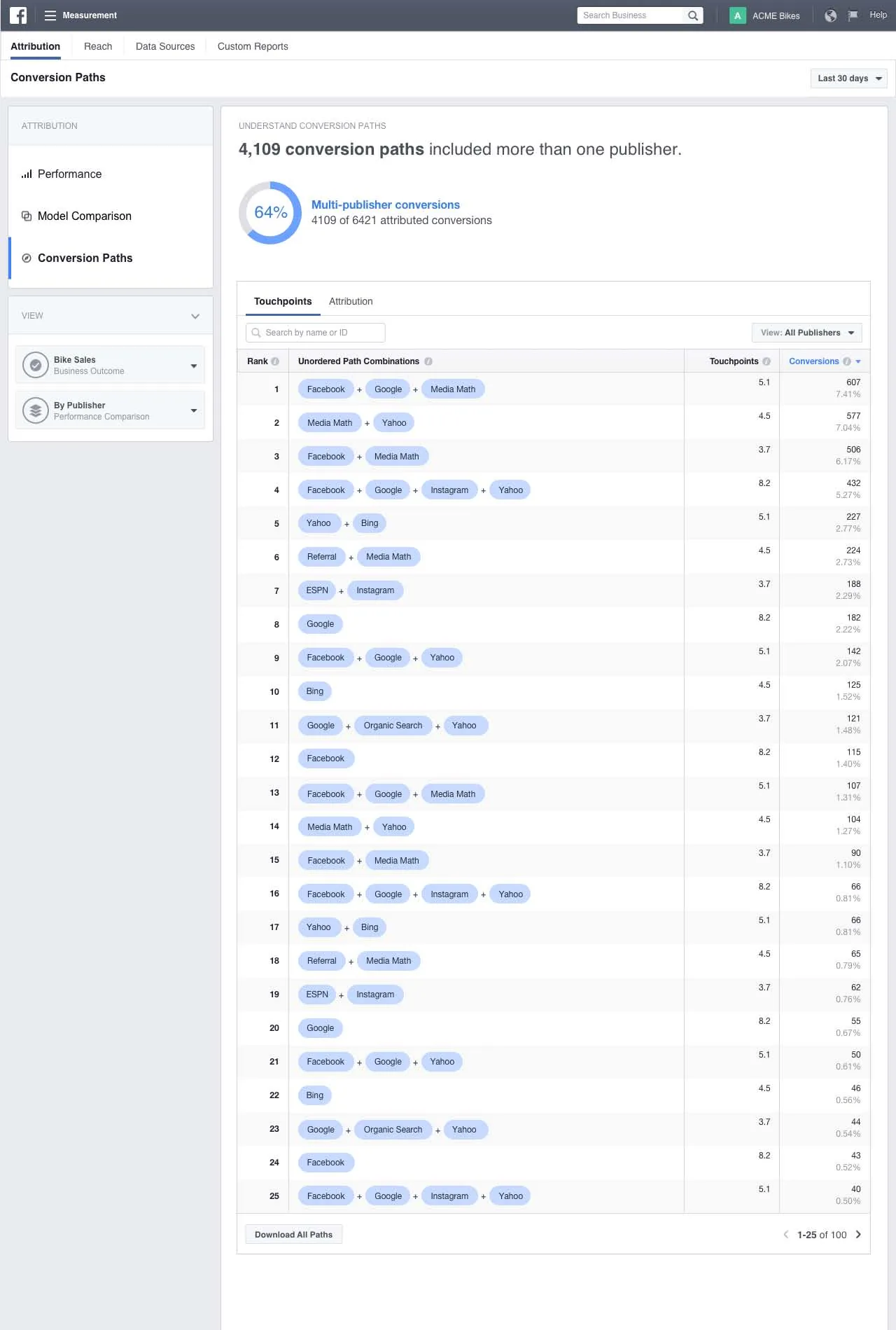
Beta conversion paths report: multi-publisher paths to conversion

Beta: conversion paths

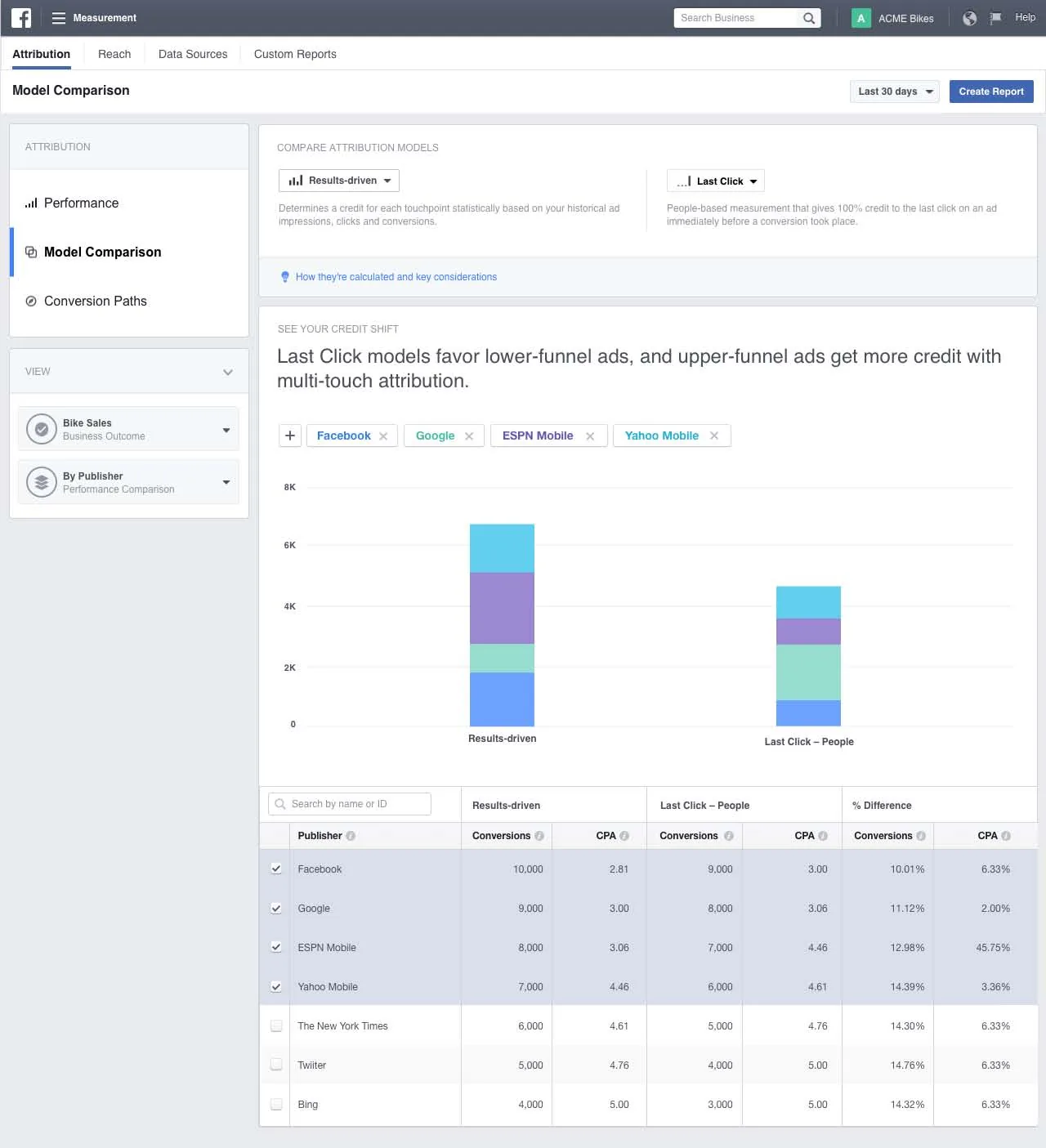
Beta model comparison report

Beta: model comparison

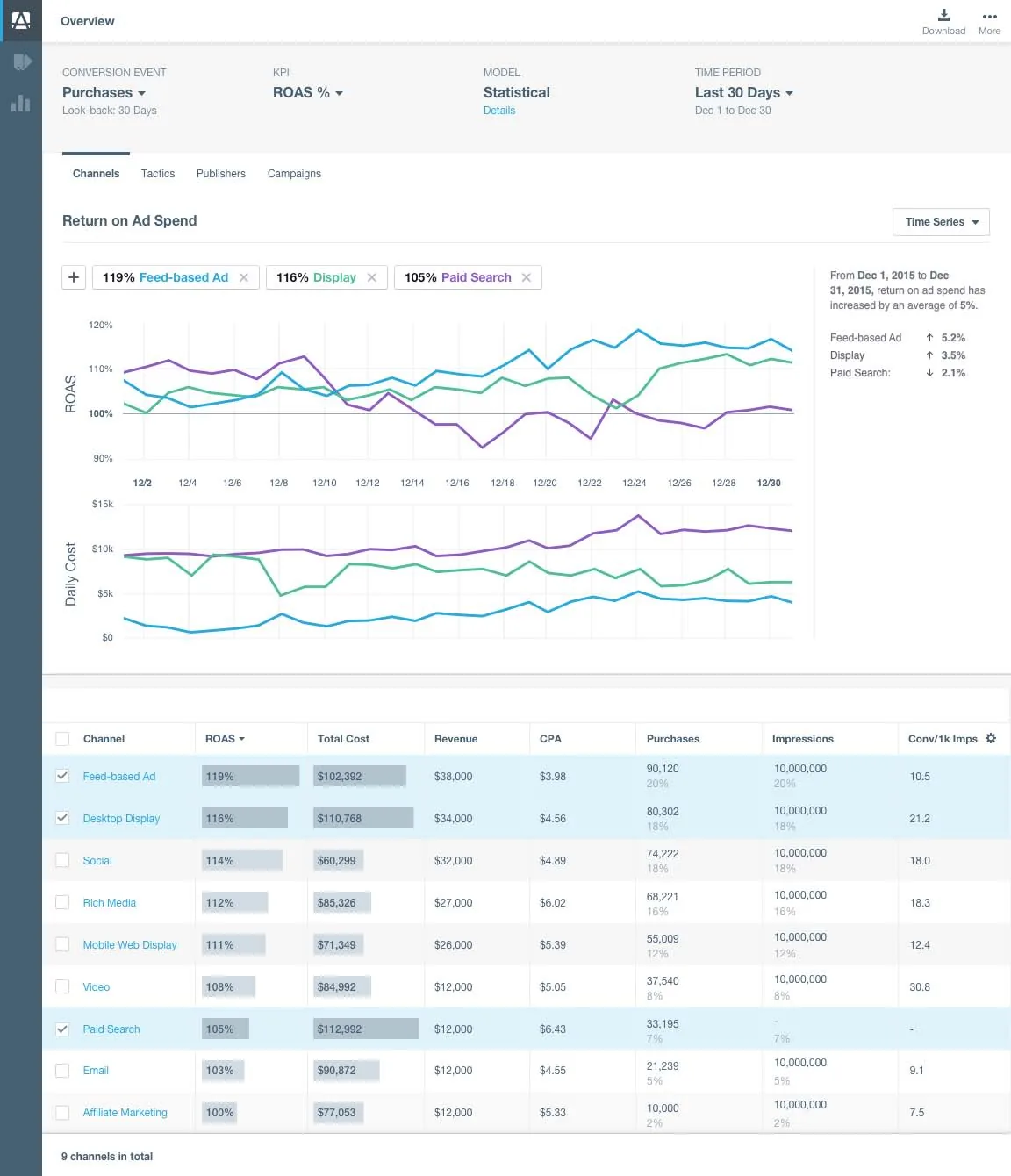
Alpha report: return on ad spend by channel over time, with a channel table

Alpha: return on ad spend over time

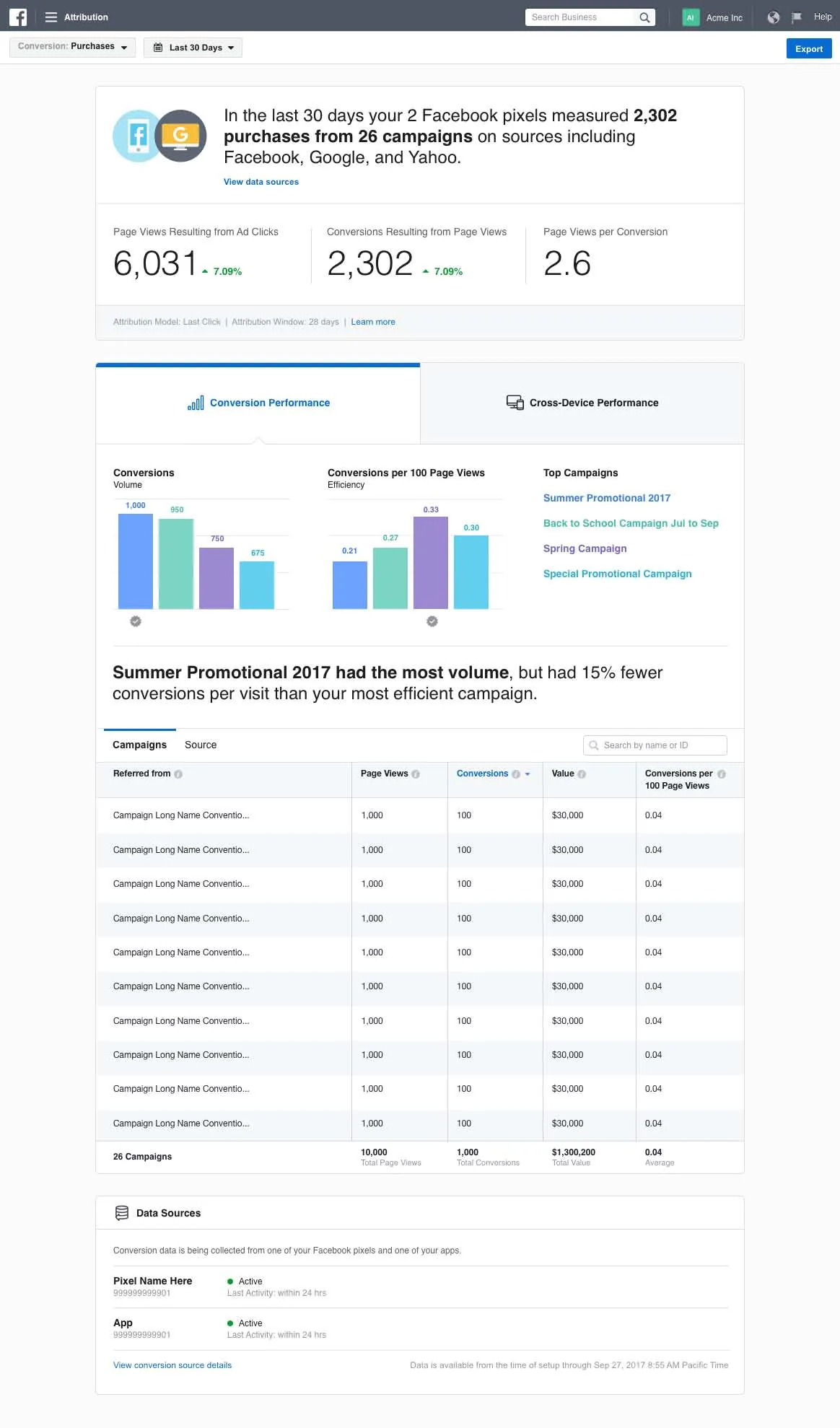
Limited release overview: a headline sentence, three key numbers and campaign charts

Limited release: Lightweight Attribution

1–3 / 7
Problem
Siloed, cookie-based tools and last-click models gave marketers no trustworthy way to credit conversions across platforms and devices.
Actions
I led product design for every release, from alpha to the self-serve v1 suite, and led two other designers. I shipped key reports including model comparison, conversion paths, and attribution windows.
Outcomes
Within three months of launch, it was Meta’s highest-volume measurement product, at $5.6M in daily measured spend. Within a year, that grew to $18.1M daily, with 60% growth in peak usage.

Read the full case study

More work

More case studies are available with a password.