Case study · Meta · 0-to-1
Facebook Attribution
I conceived, designed and shipped Meta’s largest-volume ads measurement product.
- Problem
- Last-click attribution gave search ads the credit, so most measurement tools showed Facebook and Instagram underperforming Google.
- Actions
- Led design from alpha to general availability, and architected the v1 public product.
- Outcomes
- Daily measured spend grew from $5.6M to $18.1M in the first year.
The problem
Industry standards for digital ad performance came from Google, which credited a sale to the last ad a customer clicked. That undervalued upper-funnel ads and favored search ads, where customers already intend to buy. Most measurement tools showed Facebook and Instagram underperforming Google, and our team set out to change that belief.
Marketers had no accurate, trustworthy way to attribute conversions across publishers like Meta and Google, or to de-dupe customers who saw ads on several devices. Our product problem was harder still: how do you help marketers understand, trust and act on results that give more credit to upper-funnel ads, when their expertise varies so widely?
How I led
Attribution grew from a single report into a suite of measurement tools and a public launch. I led product design for every release, across 3 product managers and 3 engineering managers, and managed the 3 designers on the team.
- AlphaAtlas Report
- BetaAdvanced Measurement
- Limited releaseLightweight Attribution
- V1Facebook Attribution
- Design studio twice a week for design, content and research to work through ideas together.
- Design crit every week for all of Measurement Design, about 40 people across Menlo Park and Seattle.
- Cross-functional reviews every two weeks, so the whole team saw early work and agreed on scope.
- Marketer Panel: I started it with our researcher. Early users across industries, company sizes and skill levels gave us fast, candid feedback on work that was foreign to most of the team.
Alpha“Explain it to me.”
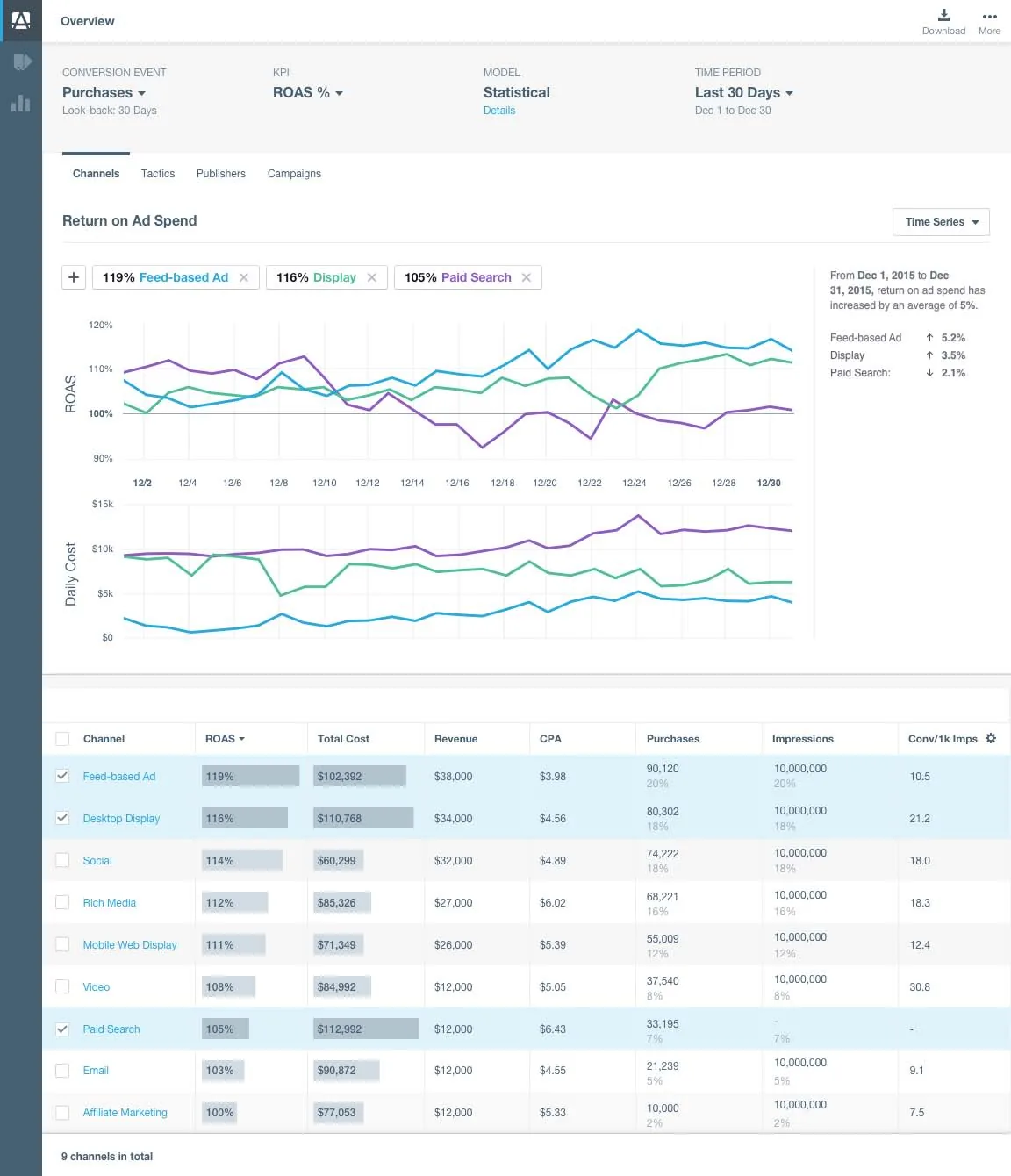
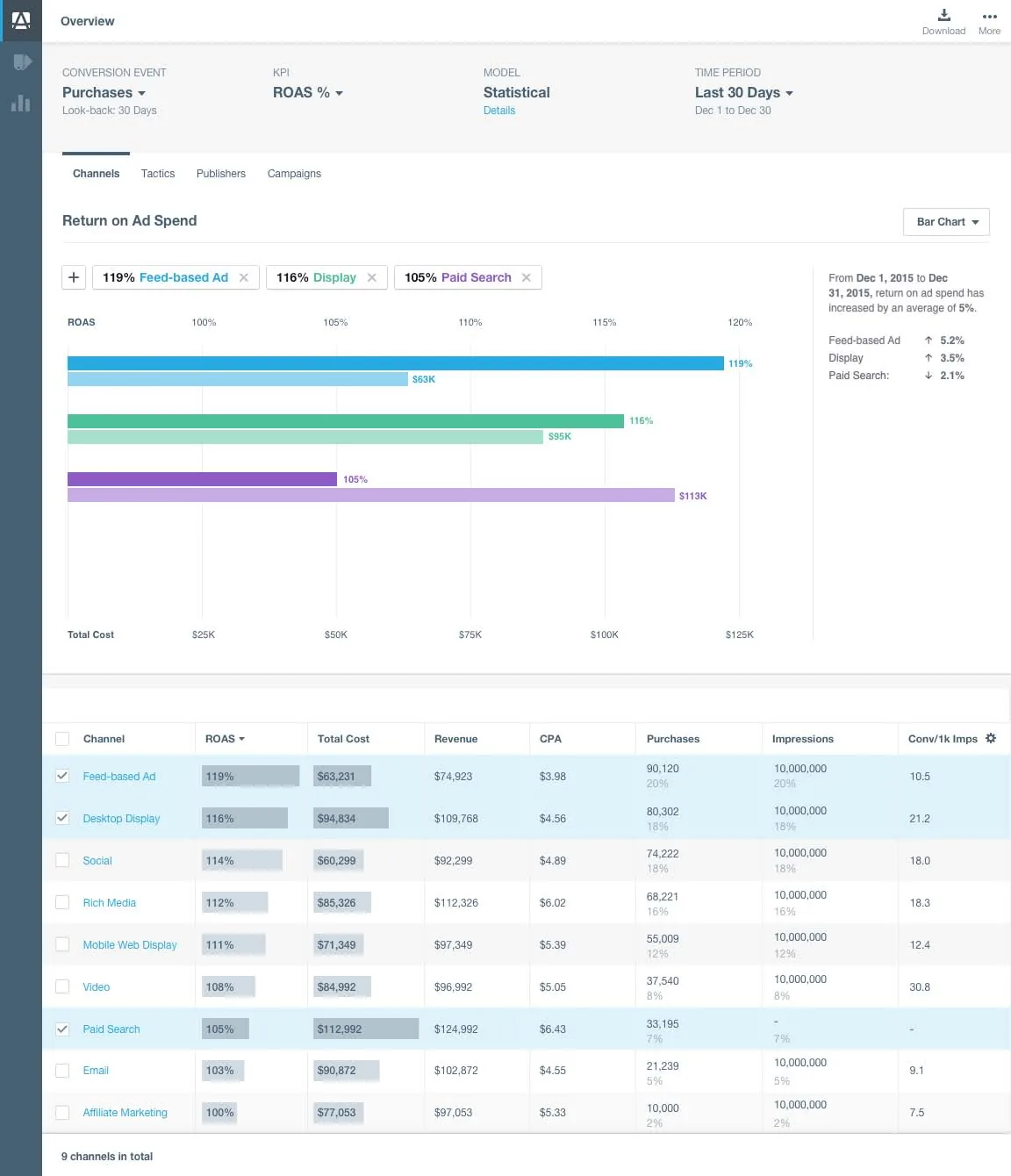
We shipped an alpha report with cross-platform ad tracking, tables and data visualizations. Sophisticated marketers understood why the numbers differed from what they were used to. Most marketers needed more explanation.
BetaValuable insights, at a price.
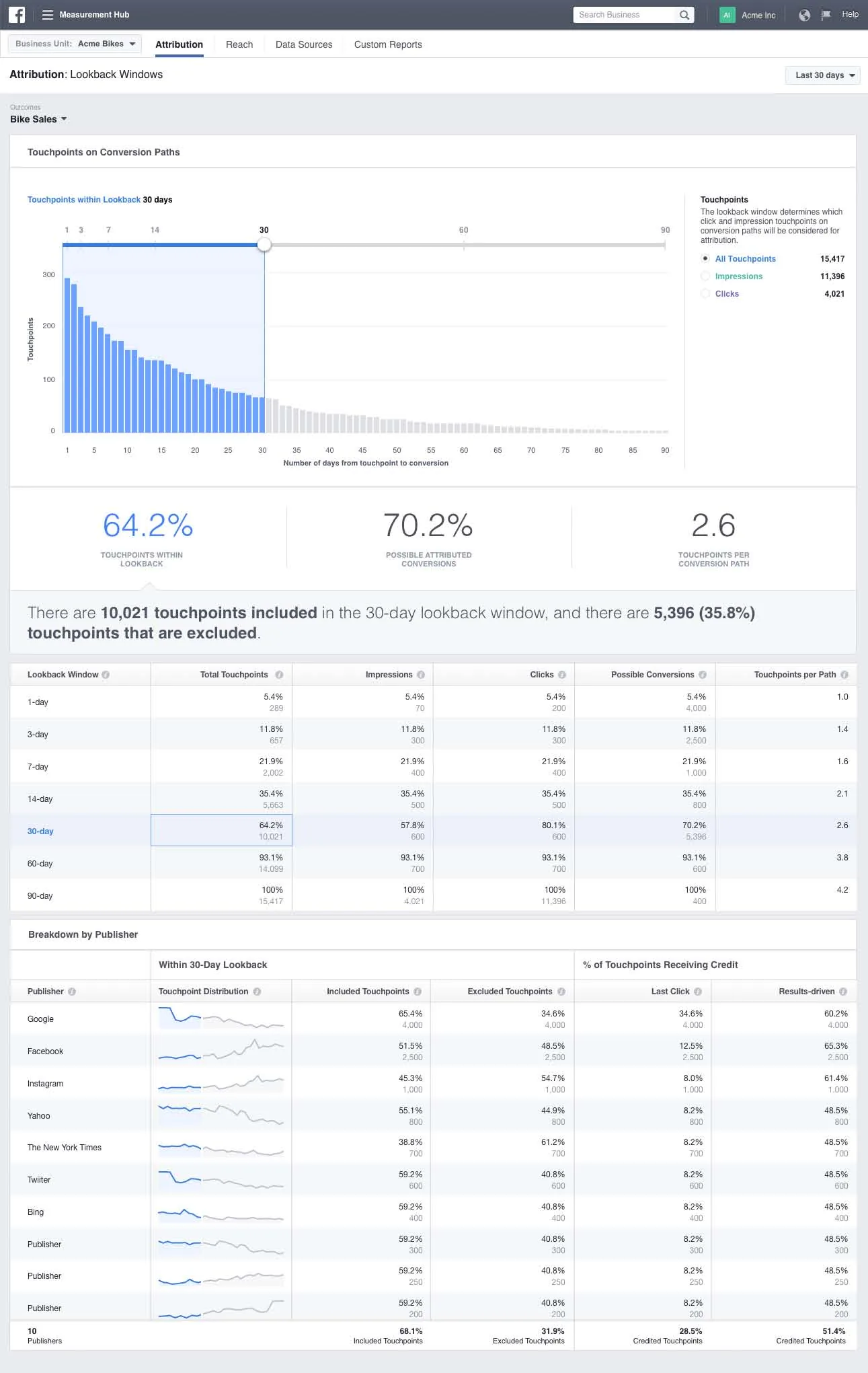
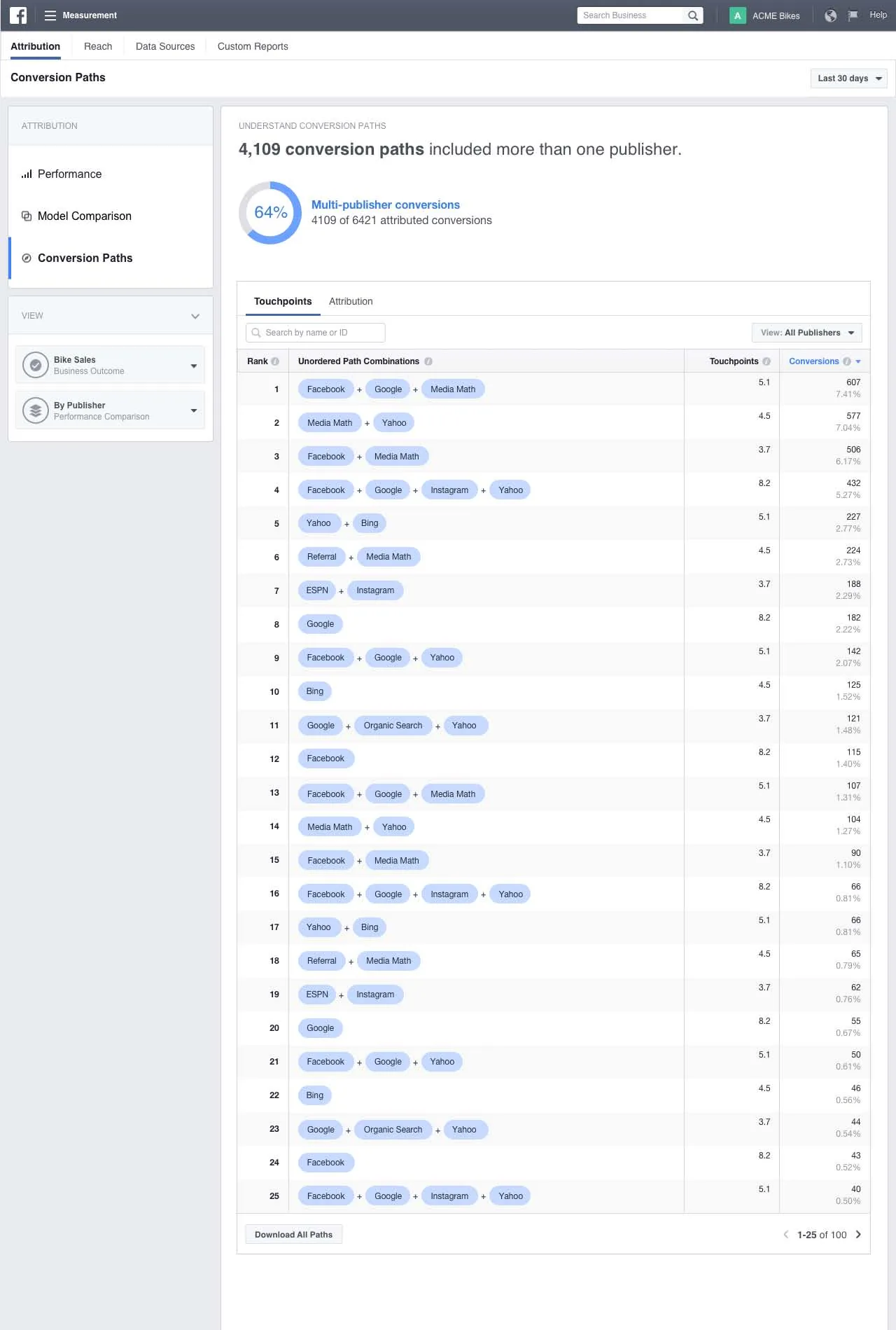
A suite of advanced measurement tools followed, helping marketers see the value of their full funnel. But tracking setup was slow and error-prone, and some reports needed an expert to explain them.
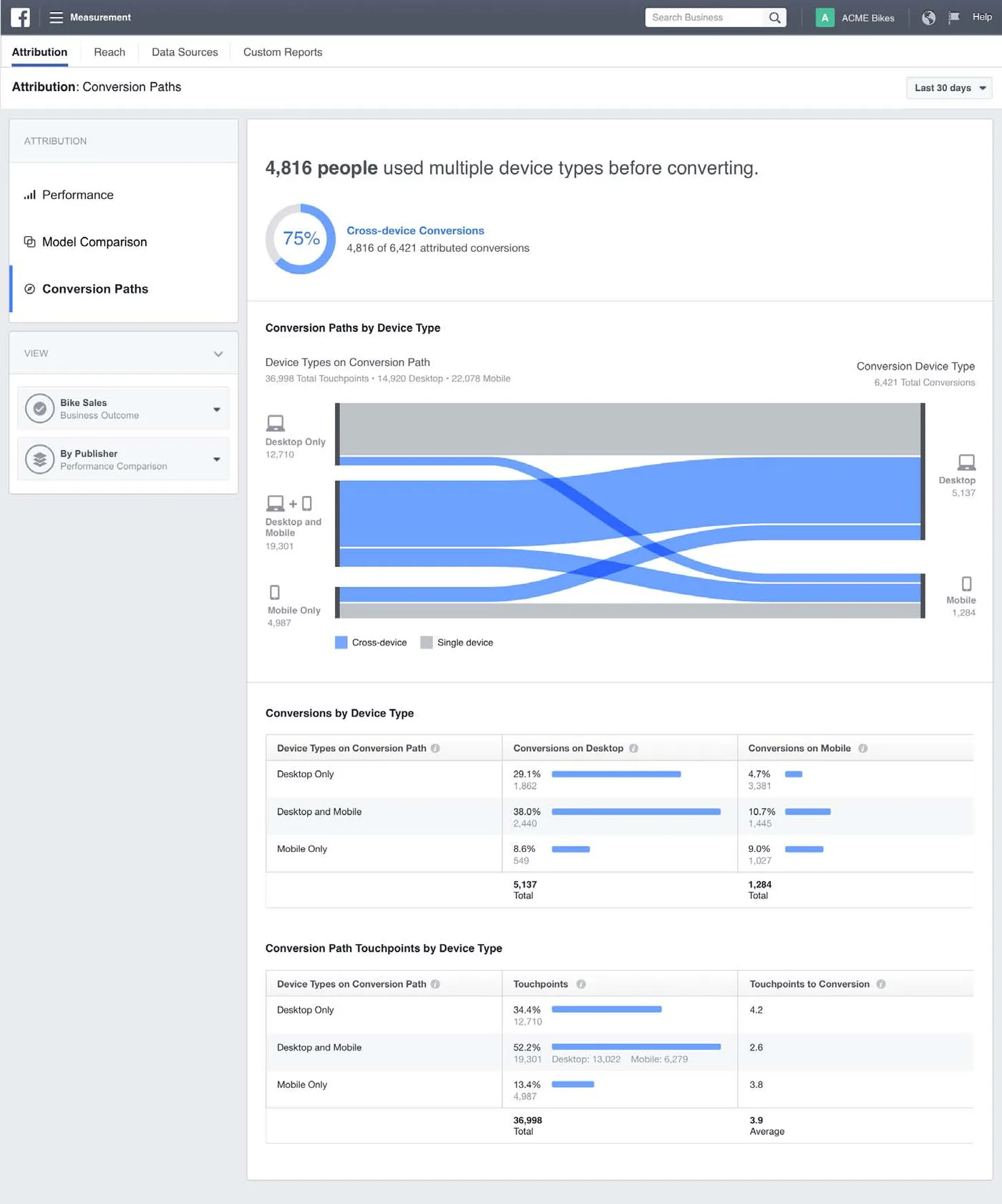
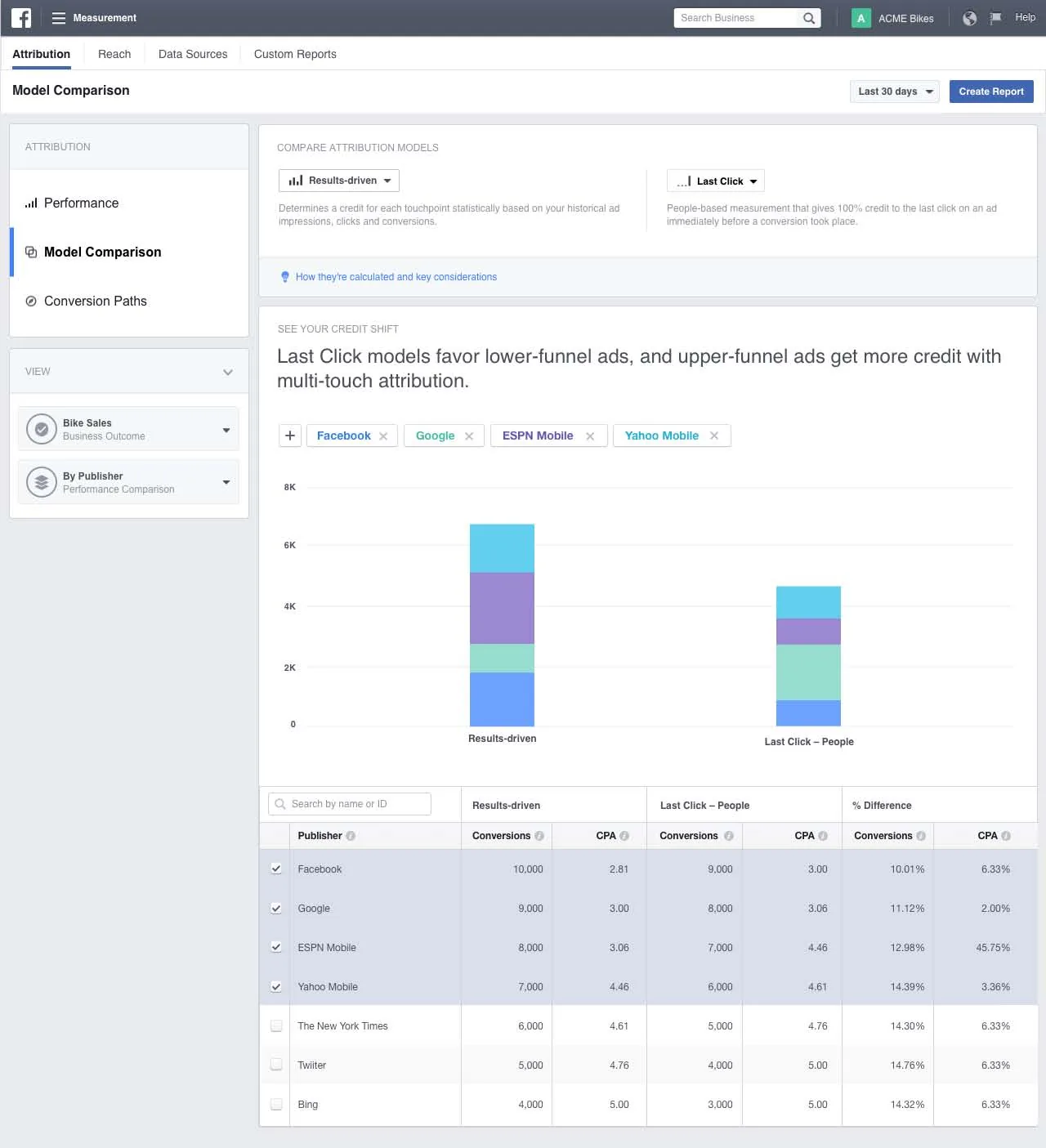
Limited releaseEasy to set up and understand. Not enough detail.
To balance what we learned, we launched a lightweight beta that needed almost no setup. Marketers could instantly see cross-publisher performance, but only for ad clicks.
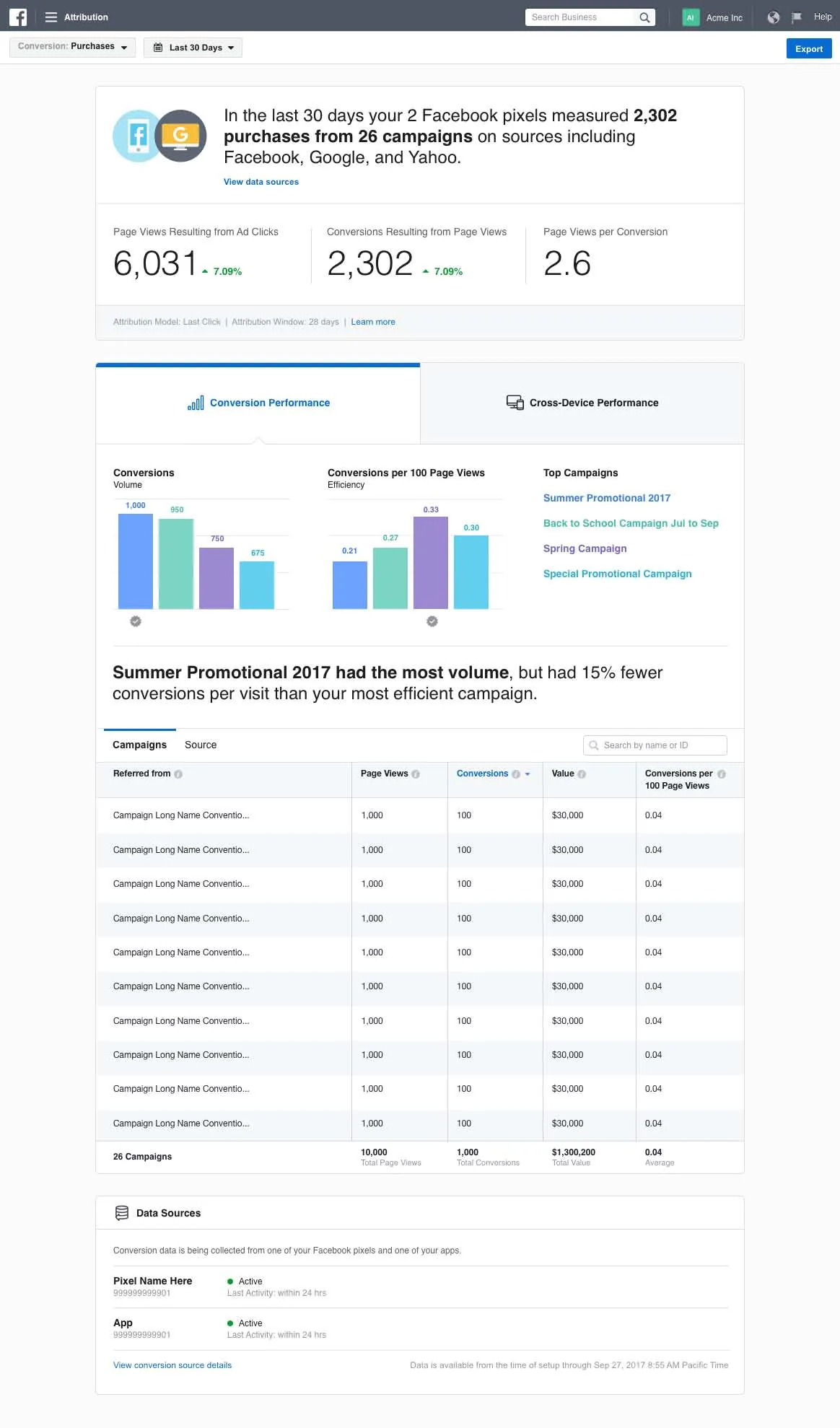
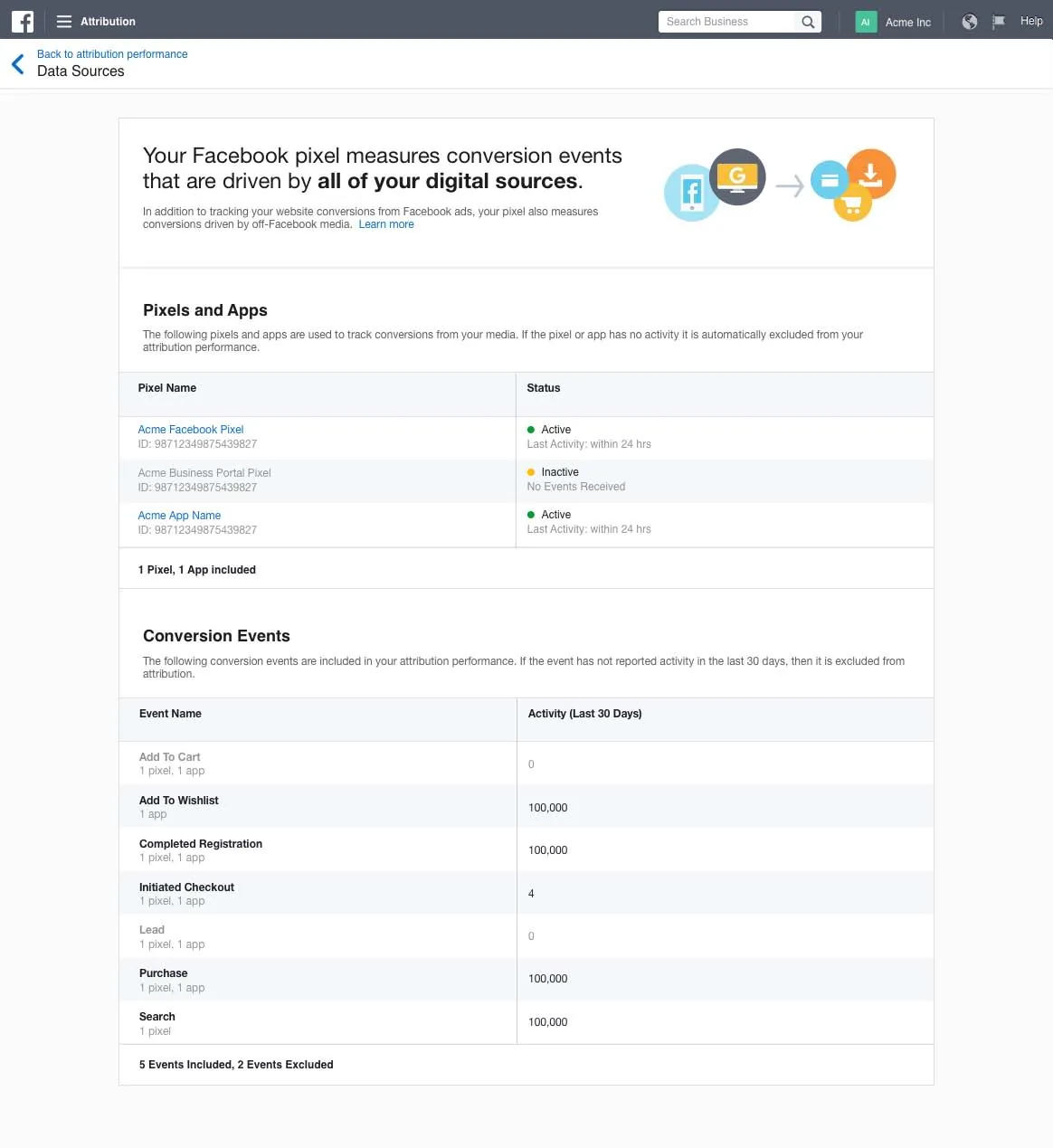
V1 · General availabilityBasic by default, advanced on demand
For the public launch, every feature had to pass three tests.
- Simplicity
- Could most marketers use and understand it without much explanation or setup?
- Utility
- Would they come back to it regularly, or use it once?
- Insight
- Did it show something valuable or new about the value and return of Meta ads?
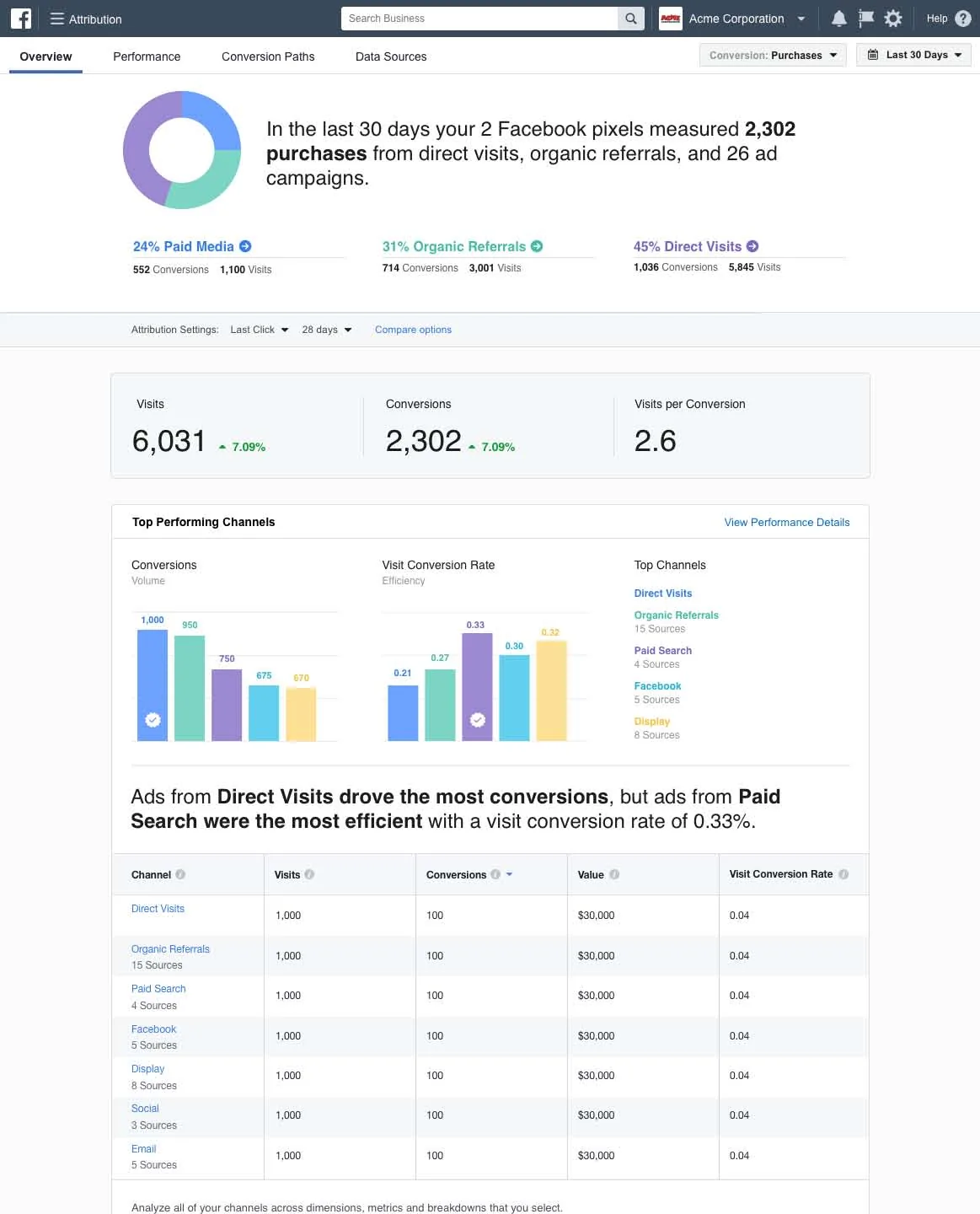
V1 combined the best of Lightweight Attribution and Advanced Measurement. Marketers got instant reporting with no setup, and could add cross-publisher tracking, settings and drill-downs when they wanted more.
 1
2
3
4
- A headline first: one sentence on performance before any chart.
- Data sources up front: paid media, organic referrals and direct visits, each with its share.
- The insight in words: which channel drove the most conversions, and which was most efficient.
- Drill-down below for marketers who want the detail.
Results
| Measure | Result |
|---|---|
| Daily measured spend | $5.6M → $18.1Min the first year |
| Volume among Meta measurement products | #1within three months of launch |
| Growth in peak usage | 60% |
Looking back
- Trade-offs
- We gave up parts of the original vision to remove real friction and improve engagement.
- Visibility
- Sharing design with the whole team, often, kept us aligned and let us correct course early.
- Relationships
- Strong relationships across the team built good intent, helped us understand each other’s priorities and made ideas easier to share.